Posted by Scott Stanford
Last updated 30th July 2023
reading time
For many a marketer, search engine optimisation (SEO) plays a crucial role in driving organic traffic to websites. One of the key elements of on-page SEO is optimising the images used on your site.
Too many of us focus solely on keywords and meta tags, yet we often overlook the importance of the mighty alt text.
In this article, we will explore why strong alt text is essential for supporting your on-page SEO efforts and how you can effectively incorporate it into your website.
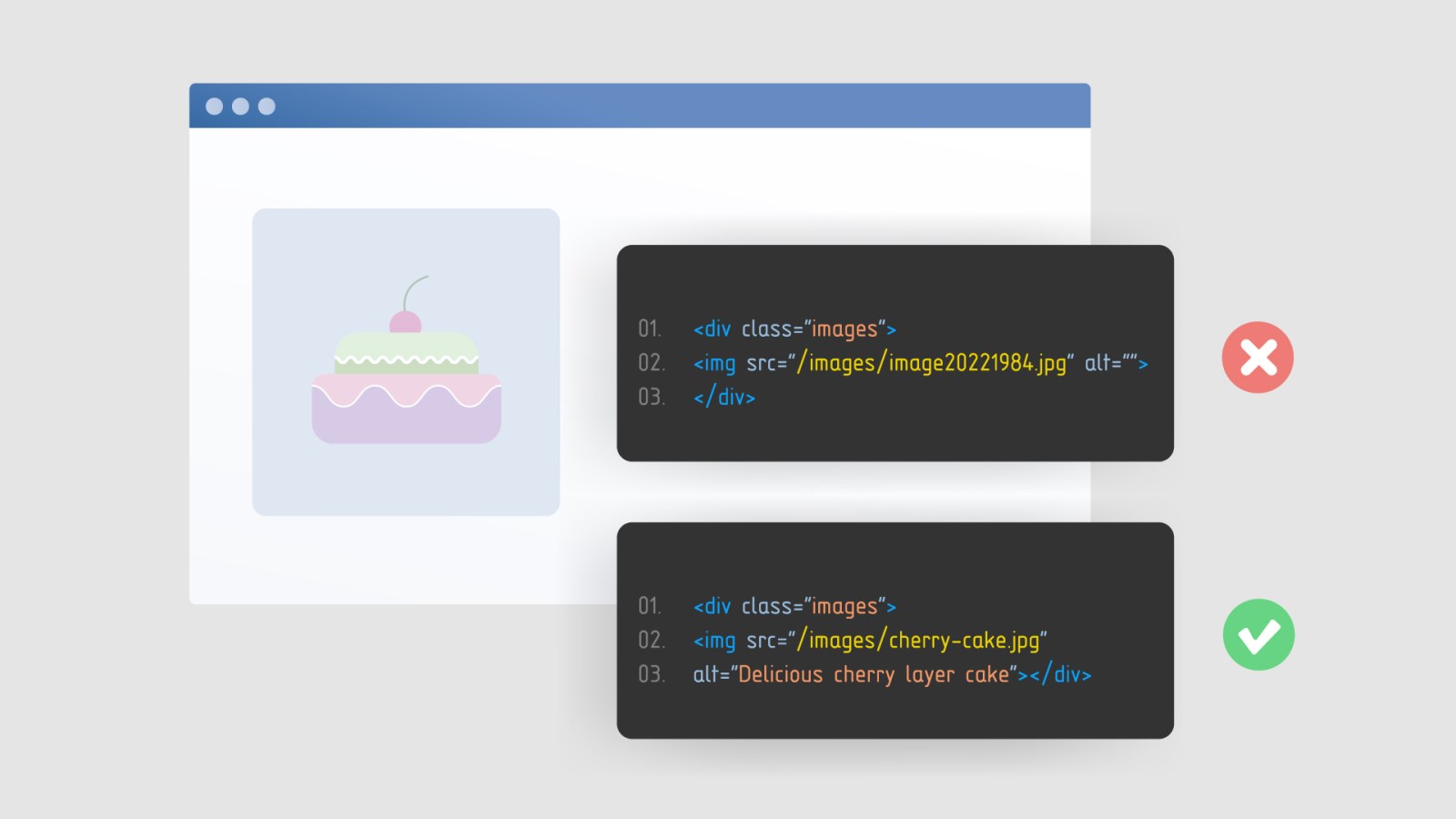
Alt text, short for alternative text, is a descriptive attribute added to HTML image tags. Its primary purpose is to provide a textual description of an image when it cannot be displayed or accessed by users.
For a number of reasons such as:
Alt text ensures that everyone, regardless of their ability or device limitations, can understand the content and context of an image.
Gone are the days of all text being a forgotten optional, but now rather a crucial requirement as part of your ongoing SEO efforts.
Alt attributes are a way to provide information about the image to users who can’t see the image. This is good for accessibility as well as search engines.
Alt text serves as valuable content for search engines because they rely heavily on textual cues to understand and index web pages accurately.
As outlined in Google Search Central, image optimisation for SEO can aid in driving traffic to your website.
This is because when you provide relevant alt text for your images, you are helping search engines understand what the image represents and how it relates to the surrounding content. This contextual information aids in improving keyword relevance and overall page visibility in search engine results pages (SERPs).
Without alt text, search engines may struggle to interpret the meaning and relevance of your images, resulting in missed opportunities for ranking higher in search results.
To optimise your alt text effectively, consider the following best practices:
1. Be descriptive: Provide a concise and accurate description of the image using relevant keywords (but try to avoid keyword stuffing). This description should convey the image’s purpose or message.
2. Keep it concise: While being descriptive is important, avoid unnecessarily long alt text that could overwhelm or confuse users. Aim for around 125 characters or less.
3. Don’t stuff keywords: Although it’s crucial to include relevant keywords in your alt text, avoid keyword stuffing as it can negatively impact user experience and SEO.
4. Be specific: If an image contains important details or elements that are relevant to the surrounding content, make sure to mention them in your alt text.
While alt text primarily serves as an accessibility feature and an SEO tool, it also enhances user experience (UX) on your website. When images fail to load properly, users will see the alt text instead. By providing meaningful descriptions through alt text, you can ensure that users still understand what the intended image is even if they cannot view it visually. This improves overall UX by creating a more inclusive browsing experience for all users.
Alt text offers an excellent opportunity to incorporate relevant keywords into your on-page SEO strategy. By aligning the alt text with your target keywords, you can enhance the relevance and visibility of your web pages in search engine rankings.
However, it is important to strike a balance between keyword optimisation and keeping a natural-sounding description. After all, the mantra of writing for humans first and search engines last is paramount.
Remember, the primary purpose of alt text is to describe the image accurately, so avoid forcing keywords if they don’t fit organically.
Some game-changing options to help you streamline your SEO efforts in this field would be to create alt text for your images dynamically.
For example, in the Sites Done Right platform, our AI-powered engine will help to garner the context for your images based on a number of factors including the file name, the section or area where the image might appear and the target keywords for the page you are adding the image to (amongst a range of other factors).
With the ability to override alt text manually, it puts our customers in pole position when it comes to SEO and image optimisation.
Boost your on-page optimisation on autopilot with our AI-powered SEO Grader, Dana.
Strong alt text is an often overlooked yet critical component of on-page SEO. By providing descriptive and keyword-rich alt text for your images, you improve accessibility for all users while also enhancing your website’s visibility in search engine results.
Are you incorporating these best practices into your SEO strategy? Are you reaping the benefits of optimised alt text right now? Why not reach out in the comments to let us know of your hits and misses when it comes to image optimisation for SEO!
Scott is one of the founders at Sites Done Right and leads the development and customer success teams. Able to get his hands dirty in development when needed, he works on our platform roadmap of fantastic features to delight our customers.
"*" indicates required fields
Our website uses cookies to make your browsing experience better. By using our site you agree to our use of cookies.