


The anatomy of case studies that are convincing

Posted by Scott Stanford
Last updated 6th February 2021
reading time
-
Project and client particulars

Providing a general background to your case study is the starting point for whether or not a website visitor will invest the time to read further on. Typically, this consists of a project title, project image, client name and client logo. What this does, in a nutshell, is provide context for the case study in a single view.
Working with titles that explain the results achieved is an excellent way of building engagement (our example of £0-£36K new business in 6 months spells out the specific tangible benefits this particular client received). Choosing images that relate to the industry they work is in, or even the work in practice is also a great way of building rapport and trust.
When it comes to the project particulars, you may also want to include information on the project location, the timescales involved with completing the work, indicative budgets and other ancillary information that may help future customers make informed decisions.
-
A background of the problems faced
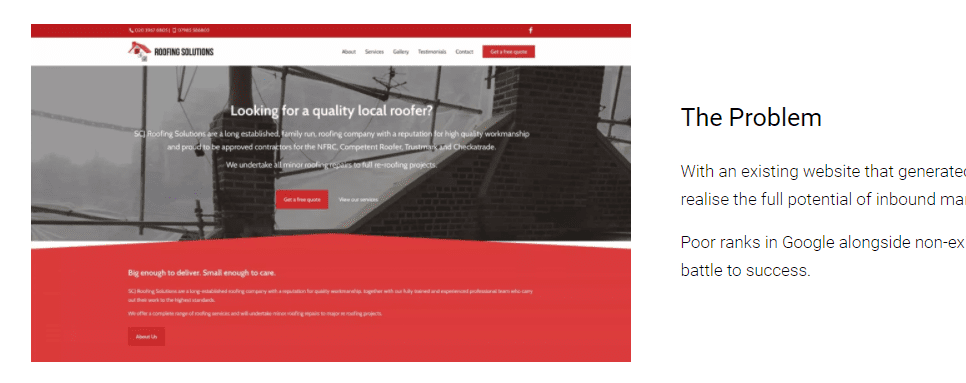
It is imperative to consider a clear story and journey towards the path to success within your case study pages. The all-important first step in this process is providing an overview of the state your client was in prior to your involvement. What issues were they facing and what impact was this having on operations, efficiency and profitability.
When you effectively do this, you'll find access to a pool of prospects who can relate in whole or in part with similar hurdles that will prompt decision making.
-
A breakdown of the solution provided
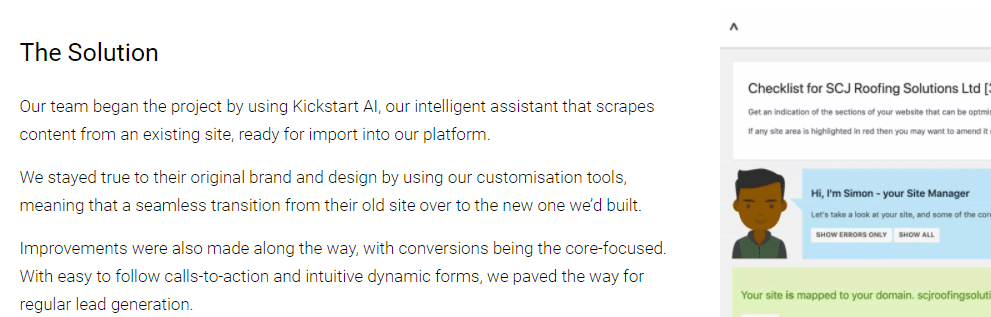
Once you've established the background of the problems faced, it's time to shine and discuss what you did to resolve these issues.
A quality solution section on your case study pages is the perfect chance to highlight your approach to delivering on client needs. Use this opportunity to talk about the specific services you'd provided, the products applied and most importantly your unique ability to deliver the work.
Try to be personable also - feel free to make mention of the members of the team involved in the project, and the unique aspects of your delivery process (for example 'the team arrived early to start on time' or 'we worked around the client both quietly and expeditiously as not to interrupt the regular flow of business').
-
An outline of the results achieved

The last chapter of the case study story is the benefits achieved after the work is completed.
Your results section will be typically the convincer, the cherry on the cake. It serves as an affirmation of your ability to deliver what you've described in your problems and solution sections. You can consider results both in terms of tangible outcomes (like return on investment or revenue generated) and softer benefits achieved (satisfaction of the client, time freed up etc).
Try to include a descriptive visual of the core results achieved as quick way for readers of your case study to ascertain what you've delivered.
-
Project images and social proof
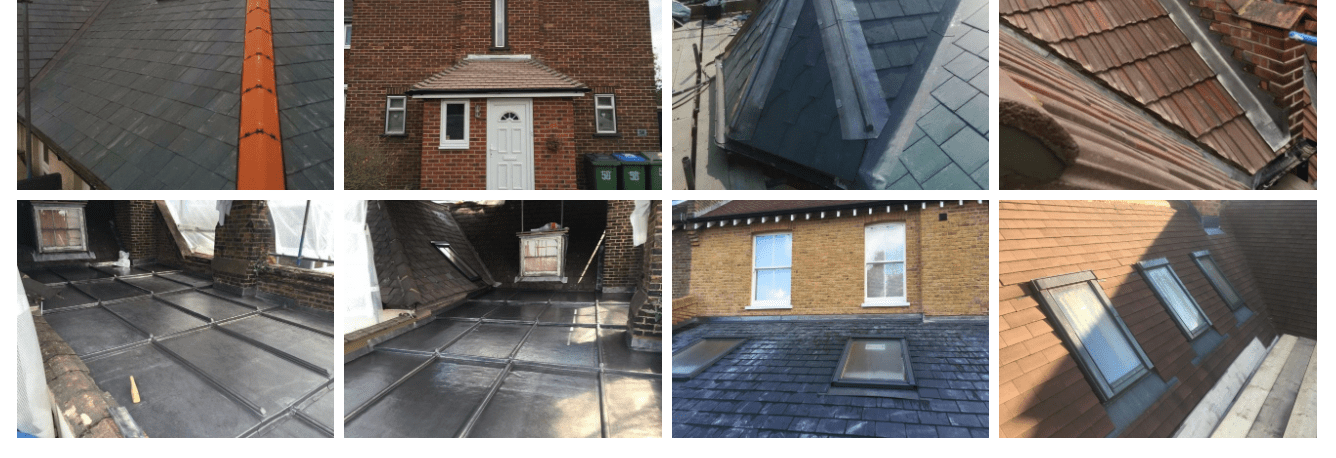
So, you've written an effective case study. It's time to take things up a notch by including a gallery of images from the project. These will help to bring your page to life in a way that words alone cannot.
Whilst this may be simple to perform in certain industries (trades can show a walk-through of the work completed with relative ease), this is also applicable for other business types by making use of screenshots of software if you're a professional service for example.
Another area of importance is your social proof, namely your testimonials which will offer an unbiased viewpoint and external perspective of the project completed. Similar to the flow of your case study, a testimonial should cover the points of the problems faced, approach to work and results achieved. You can find out more in our in-depth guide to quality testimonial pages here.


